The First Comparison Wound
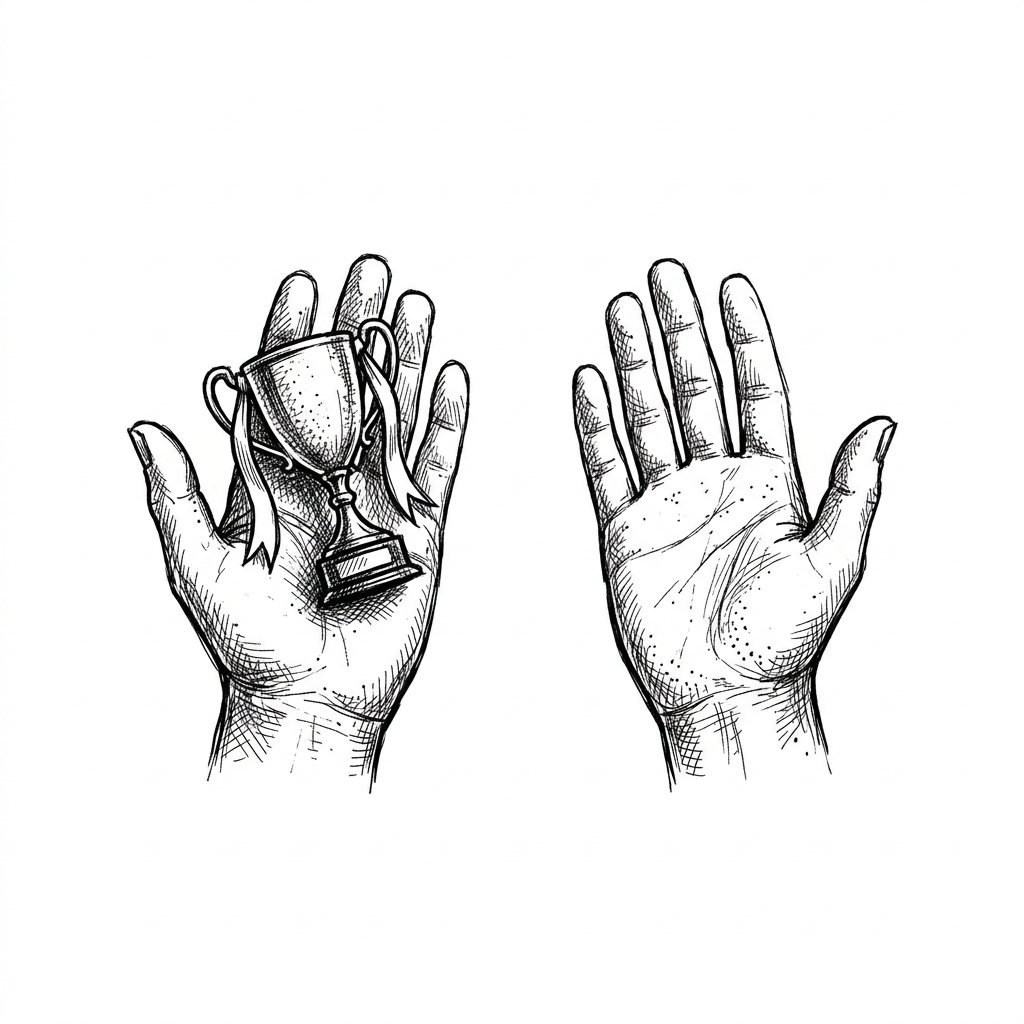
By the time I was seventeen, we could afford the bicycle.
I want you to feel the whole weight of that sentence, because I did not let myself feel it at the time. I buried it under something else so fast that I never once, in twenty years, stood still inside the plain fact of it. We could afford it now. The lean years had loosened their grip the way lean years sometimes do — my father’s work had steadied and grown, an increment here, a better arrangement there, nothing dramatic, just the slow tide of a diligent man’s life finally coming in. The careful piles at the kitchen table were a little taller. There was room, now, for a thing a child wanted and did not need.
And so a bicycle came into our house at last.
It was for Areeba.
She was the age I had been. That is the part I could never look at directly. She was twelve, exactly the age I had been on the wall in Ramadan, exactly the age I had been when I dropped the catch, and she wanted a bicycle the ordinary way a twelve-year-old wants one — out loud, without shame, the wanting written on her face for anyone to read. She asked. She simply asked, the way I never had, and because the times had changed and the money was there, the answer was yes, and the bicycle arrived, and Areeba lost her mind with joy in the front room and could not decide whether to ride it or worship it.
I stood in the doorway and watched, and before I had finished watching — before I had even sorted out what I was looking at — the radio had already told me what it meant.
That was the new thing. That was the escalation, though I would not have called it that. In the beginning the voice had needed time. It had needed the walk home, the dark bedroom, the hours after. Now it arrived ahead of my own eyes. I saw the bicycle and the interpretation was already there, wrapped around it, so that I never got a clean look at the thing itself before the meaning was fixed to it.
Look, it said, before Areeba had even climbed on. Look what asking gets you. You went without. You made yourself furniture so the piles would not shrink, and you thought that was virtue, and here is the reward for your virtue: nothing. She asked once and it appeared. You could have had this your whole childhood. You only had to be the kind of person who asks. Your great sacrifice was never noble. It was only stupid. And no one even noticed you were making it.
Here is what was true, and what I could not see past the voice to reach. Nothing had been taken from me. The bicycle I did not get as a boy, I did not get because the money was not there, and the money was there now, and that is simply what time does — it moves, and things that were impossible become ordinary. My father had not held out on me and lavished on her. He had been poor and become less poor, in the plodding order in which those things happen, and Areeba had had the good fortune to be twelve on the near side of that change instead of the far side. That was all. That was the entire crime. Time had a direction, and I had been born pointing slightly the wrong way along it.
But the voice did not offer me time changed. The voice offered me I was cheated. And I took what I was offered, the way I always took what it offered, because it came in the flavour of a hard truth and everything else came in the flavour of comfort, and I had decided long ago that comfort was for people too soft to see.
Then Areeba turned around, glowing, and did the thing that I think about most.
She offered it to me.
“You can ride it too,” she said. “Whenever you want. We can share. You can have it in the mornings.” She meant it completely. She was twelve and drunk on joy and her first pure instinct, before she had even ridden it once herself, was to cut the joy in half and push the larger share toward her brother — the exact thing Daniyal had always done to me, the exact grammar of love I had grown up inside on both sides of that wall. It was offered. It was right there. The share was mine for the taking.
And I could not feel it. The ledger had already closed the entry. I stood in a doorway while two people’s love reached toward me from two different directions — my sister’s now, my parents’ behind her, the whole warm apparatus of a family that had finally, after years of going without, been able to give a child something good — and I felt none of it land, because the account had been settled before the offer was even made.
I smiled. That is the part that frightens me. I smiled, and I went and knelt by the bicycle, and I steadied it while she climbed on, and I told her it was beautiful, and I ran alongside her down the lane holding the seat the way you do until she found her balance and shouted at me to let go, and I let go, and she flew, and I laughed and clapped and called out that she was a natural. Every gesture was perfect. Anyone watching would have seen a good brother sharing his sister’s best day.
And underneath every perfect gesture the clerk was writing, calm and steady, and I was performing a warmth I did not feel with a skill that should have terrified me.
For one moment, running back up the lane, it did terrify me. I caught myself mid-performance and thought, with a cold clarity I would not feel again for a very long time: how are you this good at it? How is it that you can feel nothing and show everything, and no one can tell? And for that one moment I was not afraid of the family or the bicycle or the score. I was afraid of myself — of the smooth machine I seemed to have become, that could counterfeit love so exactly that even I nearly believed it.
Then I filed that, too.
I put the fear in the ledger with everything else, under no heading, waiting, and I went inside and washed my hands for the evening prayer and stood beside my father and held as still as I could, and I was, to all the world, a good son on a good evening in a house that was finally doing well.
I was seventeen. Something in me had learned to smile from the outside of a wall it had built, and I had just discovered I could not tell, anymore, which side of that wall I lived on.