The Empty Room
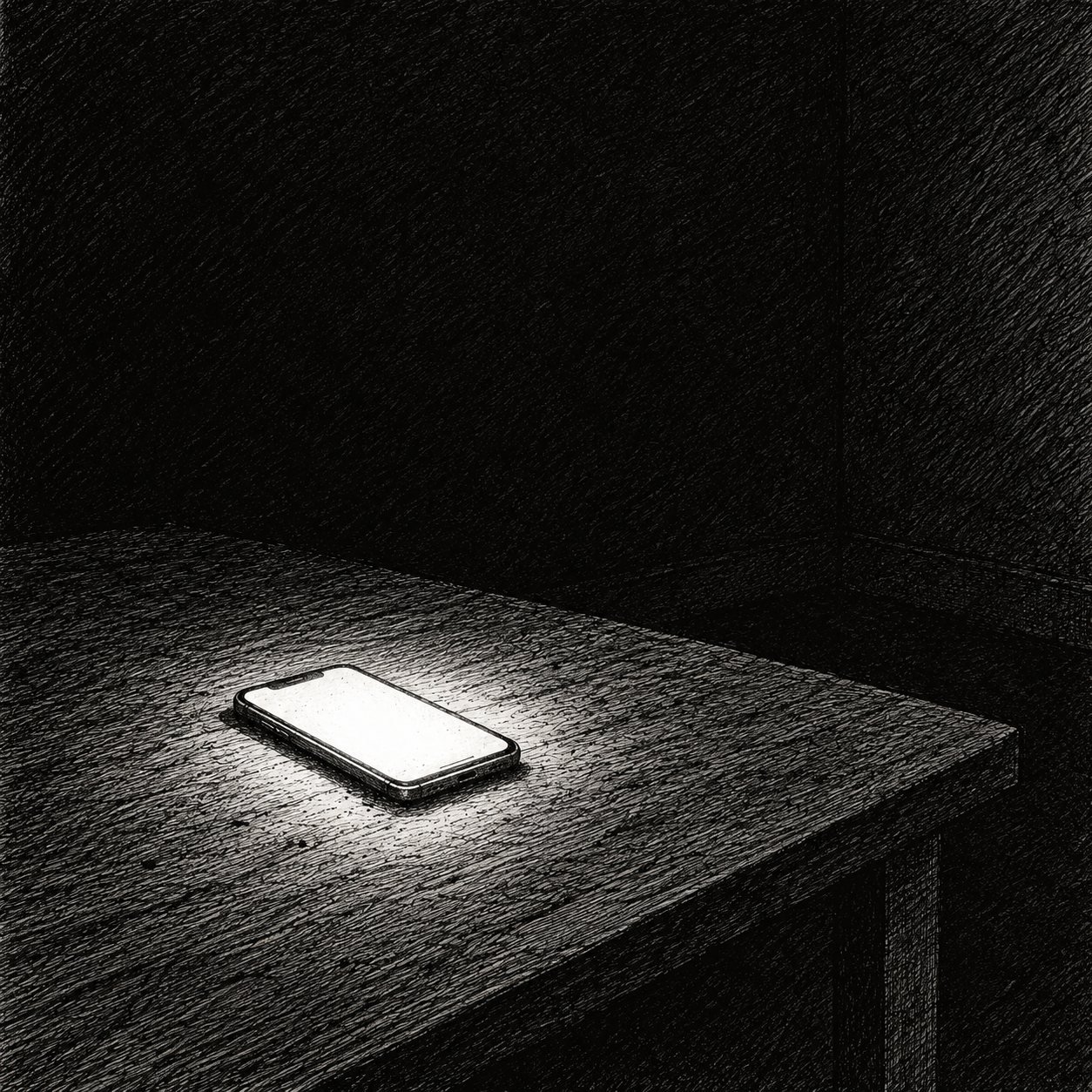
The phone is not on silent.
I want to be clear about that from the beginning, because it is the kind of small fact I have spent my life quietly changing after the event. It would be easier, later, to tell you it was face-down, switched off, drowned in some other room. It was not. It is here on the table in front of me, face-up, fully awake, and every little while it lifts a pale square of light into the dark and then lets the dark have the room back.
It is doing it now. Someone, across the city, has taken a photograph.
I know the room they are in without being told. I know the long table, and the good plates that only come out when there are enough people to need them, and the particular way the light hangs in that house at this hour, gone gold and generous the way light does when it is about to be evening. I know who is laughing before the picture even loads, because I have heard all of them laugh for thirty years and I could pick any one of them out of a crowd with my eyes shut.
The photographs arrive one at a time. A hand reaching for something. A child mid-shriek. Steam off a dish. The backs of two heads bent together over a joke I will never hear the front of. They are not being sent to me. That is the thing I have to make you understand. They are being flung up into the air where everyone can see them, and I am simply one of the people who can see, standing at the edge of a warmth I am no longer inside, watching it happen through a pane of cold glass the size of my hand.
The phone was never on silent. It simply does not ring for me anymore. There is a difference, and the whole of my life has been lived in the gap between those two sentences, insisting they were the same one.
I could call someone. I even lift the phone once, and my thumb hangs over the names, and then the strangest thing happens — the thing that frightens me more than any closed door ever has. I cannot think of a single one of them who would pick up on the first ring and be glad it was me. Not angry. Not cold. Just glad, the plain and ordinary way people are glad when someone they love calls for no reason at all. I scroll, and I scroll, and the names are all people I once had that with, and I cannot remember which of them I spent, or how, or when the spending finished.
The room I am sitting in is very quiet and very clean and entirely my own. I built it. I want to say that plainly too, though I will spend the next twenty years of this telling taking it back: I built this room. Nobody put me here. Nobody locked the door.
There is a sentence that comes to me sometimes, late, when the light has stopped arriving on the phone and the gathering has moved on to its second pot of tea without me. It comes up out of somewhere underneath, and I look at it for exactly as long as it takes to be afraid of it, and then I put it back down where it lives.
I have told this story so many times that I no longer know which parts I lived.
There. It is down again. I am already reaching for the version I prefer.
And I could give you that one. I have given it to everyone else. I have told it in kitchens and in cars and to my own face in mirrors, and it is a good story, a clean one, with clear villains and an innocent man at the centre of it, wronged and blameless and slowly abandoned by everyone he ever trusted. I have told it so well and so often that for long stretches I believed it myself.
But you are new. You have not heard it yet. And I find, sitting here in the light of a phone that will not ring, that I am tired of the good version in a way I have never been before.
So this once — only this once, and only to you — let me try to tell it true.
Let me start where the warmth was real.