The Cycle
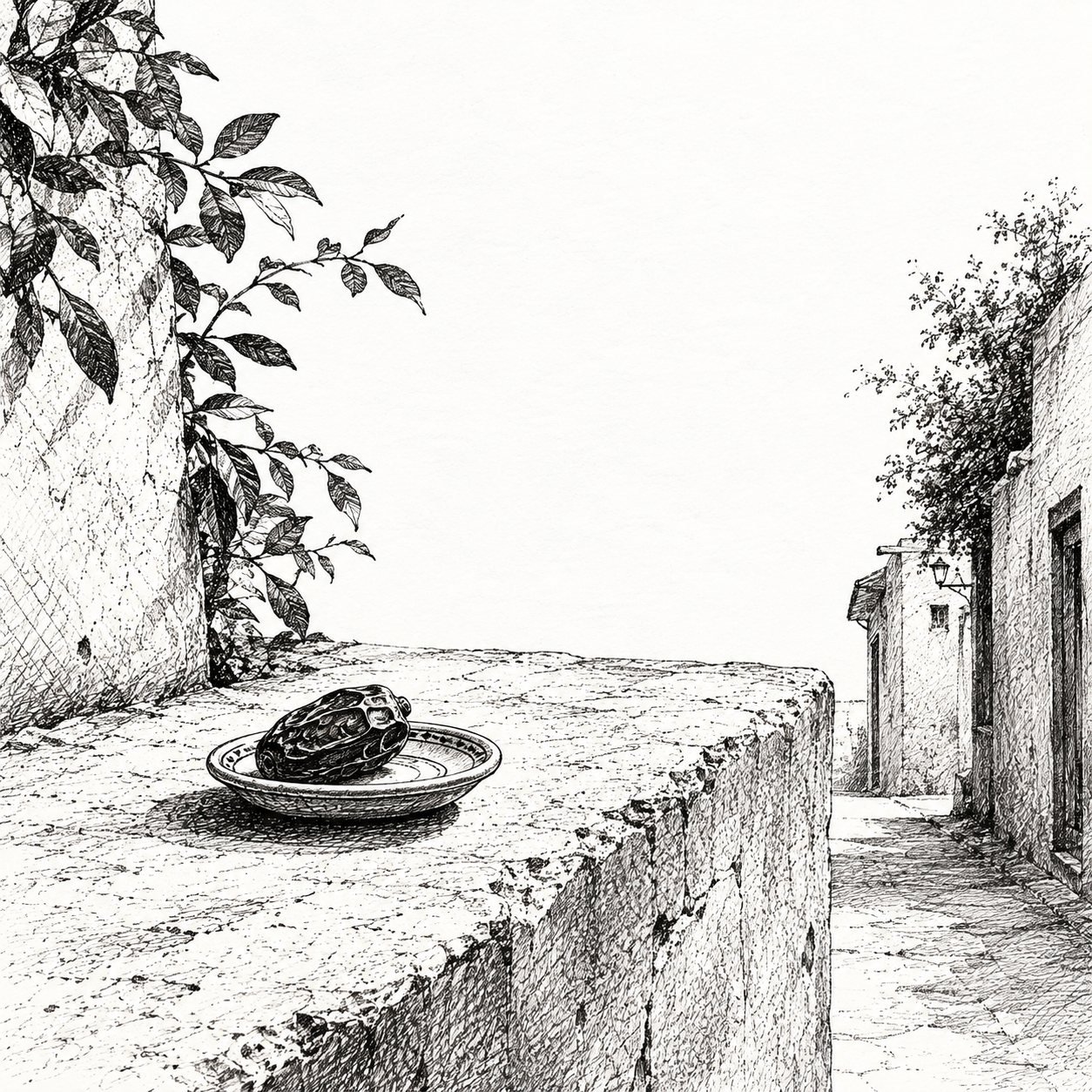
We had enough.
I need to say that plainly, right at the start, because for most of my life I told it the other way. And a lie you repeat often enough stops feeling like a lie. It settles in. It grows a root. It becomes a wound you can point to when people ask why you turned out the way you did.
So before I show you the wound, let me show you the truth. They were never the same thing, and the whole of my story lives in the space between them.
We were not rich, and we were not poor. My father held a modest, steady job. My mother ran our home the way a good conductor runs an orchestra — you never saw the effort, only the music. There was always a hot meal cooked long enough to taste of patience. In summer we ate mangoes standing over the sink so the juice would not become a crime. My school was good, and the teachers learned my name and kept it. We had relatives in other cities and always a reason to go and see them. And there were summers in the mountains — the bus grinding up the switchbacks until our ears popped, my sister Areeba shrieking at every bend for the pure joy of shrieking, my mother telling her to stop and secretly loving it.
We were not rich. But I have met rich men since, and I promise you: what we had, most of them did not.
Faith ran through all of it, so quietly I never thought to notice it — the way you never notice the floor you stand on. Five times a day the call to prayer pulled the whole street to a pause, as if the neighbourhood were one animal breathing in. In the evenings I stood beside my father and tried to hold as still as he did, and never quite managed. On Fridays my grandfather taught me the Quran one letter at a time, his thick finger moving under the words, his patience without a floor.
I did not know these were the richest things we owned. I thought everyone had them. I thought they would always be there.
What we did not have was money for extras. This is a simple thing that I would later work very hard to make complicated, so let me keep it simple while I can. We could pay for everything that counted — the rent, the school fees, the doctor, the bus tickets to see family. What we could not always stretch to were the things a boy wants and does not need. A cassette player. A cricket bat that was mine and not the whole street’s. A bicycle. The bicycle most of all.
And here is the detail the rest of my life grew out of, so hold on to it. I never asked.
Not for the bicycle. Not for anything. I was eight when I decided it. I had come into the kitchen one night for water and found my father at the table, counting the notes from his pocket into small careful piles by the light of a single bulb, his lips moving, not knowing I could see him from the dark of the doorway. For a moment he looked like a man doing sums against the tide. I went back to bed thirsty. And something in me set like cement: I would be the one child who never made those piles smaller.
My mother loved me for it, though she never knew its true shape. She told the other women on our street — with a pride that warmed me to the soles of my feet — that her Hamza never asked for a single thing. They would look at me the way people look at a child who is a little too good to be quite natural. I carried that look home and kept it on a shelf inside me and visited it often.
Remember that pride. Remember how much of me came to live on it. It matters later — when it thins, the way praise always thins as people grow, not because the love beneath it went anywhere, but because love learns to stop announcing itself. I had built a whole house on the announcing. One day I would stand in the sudden quiet and decide I was no longer loved.
Because a boy who never asks is not a boy without wants. He is only a boy who has learned to write his wants in a private book and keep the book shut. And a book you never open is a book you can never finish.
Now, Daniyal.
I have to tell you how I got him, because I did not stumble into that friendship. I chose it, on purpose, the way a careful man chooses a house.
We moved across the city when I was ten. New neighbourhood, new school, everything unfamiliar and slightly too loud, the new house still smelling of someone else’s life. Being the new boy is its own quiet exile: you exist, but only at the edge of things, and no one has decided yet whether to let you further in. For two weeks I ate lunch alone and practised looking as though I preferred it.
Then one ordinary morning I noticed a boy in my class who laughed easily — a big, undignified, generous laugh that used his whole face — and who lived, I worked out through patient investigation, on the street directly behind mine. Close enough that our rooftops nearly touched across the gap. And I made a decision as cold and practical as that eight-year-old counting his father’s money. That one. He is near. He is in my class. He laughs like the door is already open. I will make him my friend.
What I was too young to understand was that Daniyal would have been anyone’s friend, freely, without being chosen. I had drawn up a careful campaign to take a city whose gates already stood wide open. He simply liked me back, the way the sun comes up without being asked. It was the easiest thing I ever earned — and for a long, good while, I let myself believe I had earned it.
The best hours of my childhood happened on the low wall between our two streets, our legs hanging into two different families, splitting whatever one of us had smuggled out by a law so old neither of us remembered making it: he broke it in two, I chose my half. He talked, I listened, and it suited us both to the ground. Daniyal talked the way a tap runs — without malice, without pause — about which player was secretly a coward, whether his aunt’s fiancé was bald under that cap, and what he would buy me first when he was rich, of which he had no doubt at all. In the evenings we rode double on his red bicycle, me on the seat, him standing on the pedals, wobbling us both down the failing light of the lane. I would hold the back of his shirt and feel that I was being carried, very slowly, into the exact centre of the world.
The night I keep going back to is a night in Ramadan.
I was twelve. I had begun keeping the fast that year the way boys do — half for God, half to be counted among the men — and by late afternoon I was hollow and holy and unbearable. Daniyal had spent the whole day at our house; the heat had made both our mothers merciful about the rules on visiting. When the sun finally began to lower, the whole street changed its breathing. You could smell it before you could see it: oil going into pans, dates set out on saucers, the sound of frying starting up behind three different walls at once.
My mother made far more than we needed, as she always did, and sent me out with a covered plate for Daniyal’s family. Daniyal came out with a covered plate for mine. We met in the middle of the two streets like two small ambassadors of two small nations, could not stop laughing at the seriousness of ourselves, and nearly dropped both plates in the dust. Then the call to prayer went up — our mosque first, then the nearer one, then the far one always a beat behind, the three of them chasing each other across the darkening sky like something alive — and we broke our fast right there on the wall. A single date each. Then water. Then everything at once and far too fast. Daniyal pushed the larger, better share onto my plate without a word, the way he gave me the bicycle: without ever letting me see him do it, so I would never have to feel the weight of being given to.
My mouth was full, the sky was going purple, and my father’s voice lifted from inside the house as he began to pray. I remember thinking: this is the whole of it. This is everything a life is supposed to be, and I am inside it, and it is mine, and it will always be here.
Let me leave us there a moment. Two boys on a wall, one shared plate, the light going soft and orange and forgiving, a whole street breaking its long hunger on the same held breath. Because it will matter, more than anything else in this book, that you know I had this. That it was real. That it came to me unasked. And that no one ever took it away.
The first time the other voice spoke, I nearly failed to hear it.
It was later that same year. A cricket match, our street against the next, and I dropped a catch. An easy one. The ball floated down soft and certain, like fruit deciding to fall, and passed straight through my hands. We lost. In the manner of twelve-year-old boys, it was the end of the world and everyone in it. Daniyal thumped me between the shoulders and said it was nothing, and meant every letter of it, and we started home the usual way.
Then, halfway back, he laughed. Not at me — at something an older boy shouted from across the road, a joke I hadn’t caught the front of.
And underneath the ordinary evening, very quietly, a second version of it began to play. Like a radio left on low in another room, so that at first you cannot tell whether you are hearing music or only remembering it.
That laugh was about you, the second version said. About your hands. He is laughing now, and he will laugh again tonight without you, and you will never be in the room to know.
It was not much. I want to be fair to myself, because almost no one was, later. It was the kind of small, ugly thought that surely blows through every child’s head and out the other side. The only trouble was this: I did not let it blow through. I turned it over. I examined it. And I found it had a texture the ordinary evening lacked. It felt earned. It felt like knowledge. It felt like the one true thing in a whole day of pleasant lies — and I seemed to be the only one clever enough to have heard it.
I looked at my friend. He was still my friend. Still Daniyal, still wheeling the bicycle by its handlebars because the chain had slipped again, still entirely mine. The first version of the evening was the true one. The older boy’s joke, I would learn far too late, was about his own brother and had nothing to do with me. The first version was the one my eyes could actually see.
I chose the second one. Not out loud. Not even quite on purpose. But I took it inside with me.
I did not know yet that a thing you take inside does not sit where you put it. It goes looking for company.
At the wall we said goodnight. Daniyal offered me the bicycle for the morning without my asking, the way he always did. I took it, and I loved him. Both were true in the same moment as the other thing.
Then I went inside, lay on my bed in the dark, and let the radio in the other room keep playing softly to itself. I did not tell a single living soul that it was switched on.
I was twelve. I thought everyone had one.
It did not stay quiet. Within a year it had stopped needing a dropped catch to speak. It had found the dinner table, and the people who loved me most — and it had begun, gently, the way you teach a child his letters, to teach me how to keep a list.